



News


Course Expiration and Access Windows: When to Limit How Long Learners Can Access Content
Lifetime access sounds like the obvious default. Buy a course, keep it forever — what's not to like? But permanent access isn't actually the right fit for every kind of content, and plenty of course creators and training teams lose money, or lose control of outdated material, by defaulting to it without thinking it through.
Continue Reading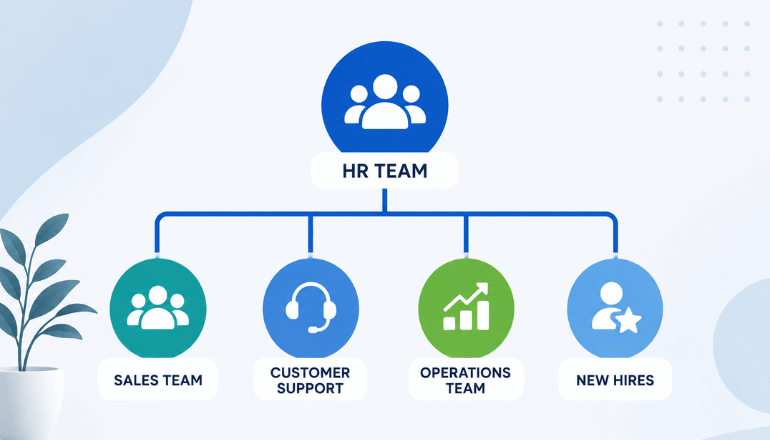
Group-Based Learner Management: What It Is and Why HR Teams Need It
Assigning training one employee at a time works fine at ten people. At two hundred, it becomes a job in itself. Group-based learner management exists to fix exactly that scaling problem, and for HR and L&D teams managing anything beyond a small team, it's less a nice-to-have feature than the difference between training software that scales and one that doesn't.
Continue Reading
OTP Sign-In for Corporate Training: Security Without Password Fatigue
Password resets are one of the quietest productivity drains in corporate training. An employee forgets their training portal login — a system they touch maybe once a month — submits a reset request, waits on an email, picks a new password that meets some policy they've already forgotten, and finally gets back to the five-minute compliance module they were trying to complete. Multiply that by a workforce, and it adds up to real support overhead for something that shouldn't need any support at all.
Continue Reading
Digital Downloads vs. Courses: When to Use Each
Not everything you sell needs to be a course. A PDF checklist, a template, a workbook, a reference guide — these get sold successfully every day without a single video lesson or quiz attached. But a lot of platforms only give you one container to put everything in, so simple downloadable content ends up dressed up as a course it was never meant to be.
Continue Reading

Question Banks and Randomization: Why Assessment Quality Matters More Than Course Design
Course creators spend weeks polishing video lessons, slide design, and lesson pacing, then build the quiz at the end in an afternoon. That ordering makes sense if the goal is teaching. It falls apart if the goal is certifying, licensing, or verifying that someone actually knows the material — because in that case, the assessment isn't a wrap-up. It's the product.
Continue Reading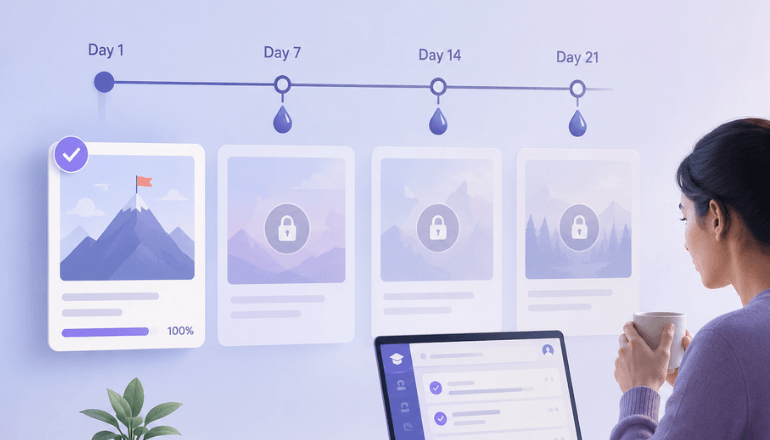
Drip Scheduling Explained: Pacing Courses Without Overwhelming Learners
Give someone a full course on day one, and most of it goes unused. Not because the content is bad, but because access without pacing rarely turns into progress. Drip scheduling — releasing course content gradually instead of all at once — exists to solve exactly that problem, and it's one of the more underused features on most LMS platforms.
Continue Reading
How to Choose an LMS for Internal Training vs. Course Sales
Most LMS buying guides assume you already know which kind of platform you need. They don't, because most platforms only do one thing well: either train your own employees, or sell courses to the public. Picking the wrong one means discovering the gap six months in, usually right when you need the feature that isn't there.
Continue Reading
eProfessor vs TalentLMS: Which LMS Actually Fits Your Business
Choosing between eProfessor and TalentLMS usually comes down to one question: are you training your own team, selling courses to the public, or both? The two platforms were built for different starting points, and that shows up in how they price, package, and prioritize features.
Continue Reading